
The Red Dot Sight That Was Built for the Moment That Matters Most
There is a specific kind of silence that wakes you up at 2 a.m. It is not the silence of a quiet house. It is the silence of something that should not be quiet — a door, a window, a room at the end of a hallway that you cannot see from where you are standing. In that moment, you are not thinking about optics. You are not thinking about MOA adjustments, battery levels, or footprint compatibility. You are thinking about getting to wherever your family is, and you are hoping that every piece of equipment between you and that door works exactly the way it is supposed to.
That is the scenario a home defense optic has to be built around. Not the range. Not a slow, deliberate zeroing session on a sunny afternoon. The 2 a.m. scenario, where your hands may be moving faster than your mind and the last thing you can afford is an optic that fails you on a technicality — a dead battery, a brightness setting left on high from your last range session, a dot that takes three seconds to wake up because the sight has been sitting untouched on the shelf for two months.
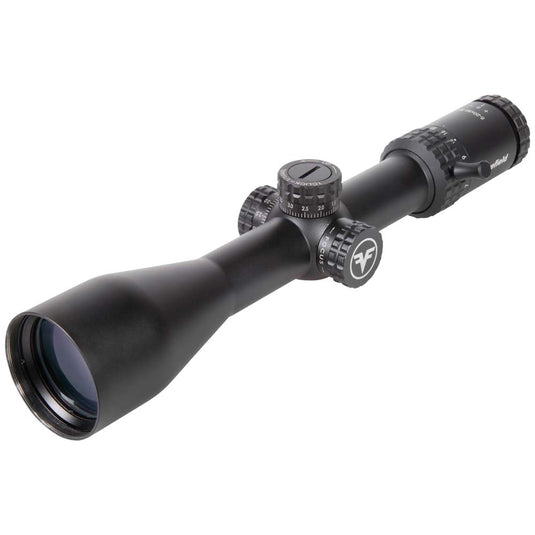
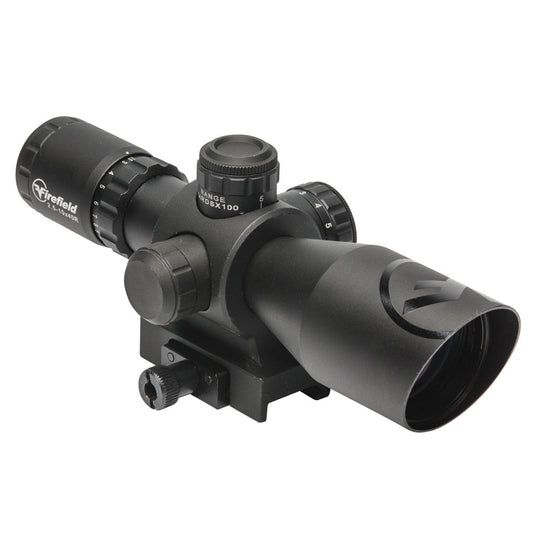
The Firefield RapidStrike Red Dot was designed with that scenario in mind. At $99.97, it sits in the category of affordable red dot sights, but its specifications tell a different story than the price tag alone suggests — one about deliberate engineering decisions that happen to solve the exact problems a home defense shooter cannot afford to encounter.
What a Red Dot Sight Actually Does — and Why It Matters for Home Defense
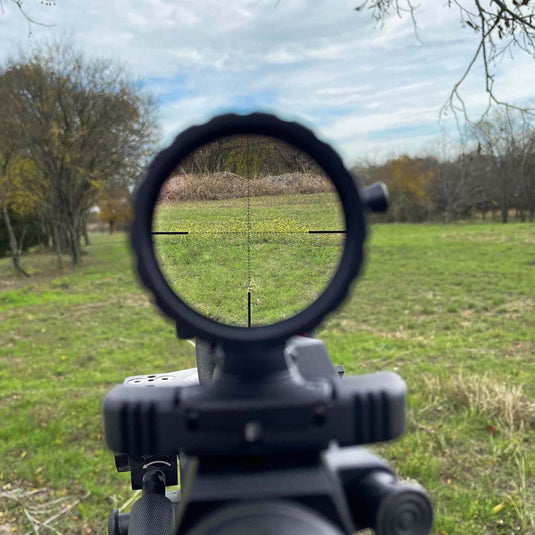
For first-time optic shoppers, a brief foundation is worth establishing before getting into the RapidStrike's specifics. A red dot sight is a non-magnifying optic that projects a small illuminated aiming point — in this case, a 3 MOA dot — onto a lens. When you look through the sight, the dot appears to float at the same focal plane as your target, which means you can keep both eyes open, maintain full situational awareness, and acquire a target significantly faster than you could through iron sights or a magnified scope.
For home defense, those properties are not conveniences — they are functional requirements. A home defense engagement is almost never going to occur at 200 yards. It is going to occur at the length of a hallway, the width of a living room, the distance between a doorway and where you are standing. At those distances, magnification is irrelevant and speed is everything. A red dot sight removes the requirement to align a front sight, a rear sight, and a target simultaneously, collapsing the aiming process into a single step: put the dot where the threat is.
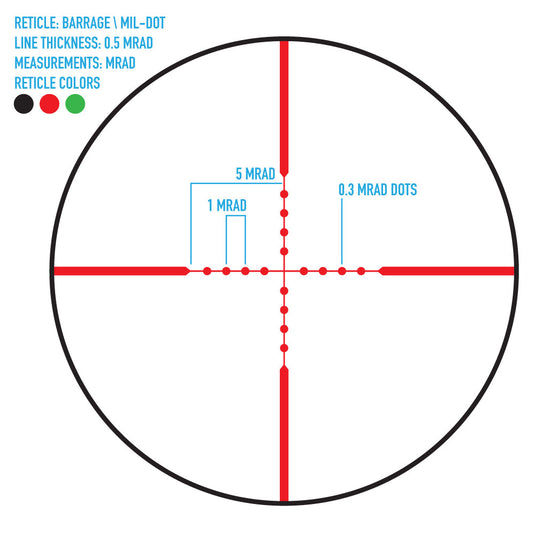
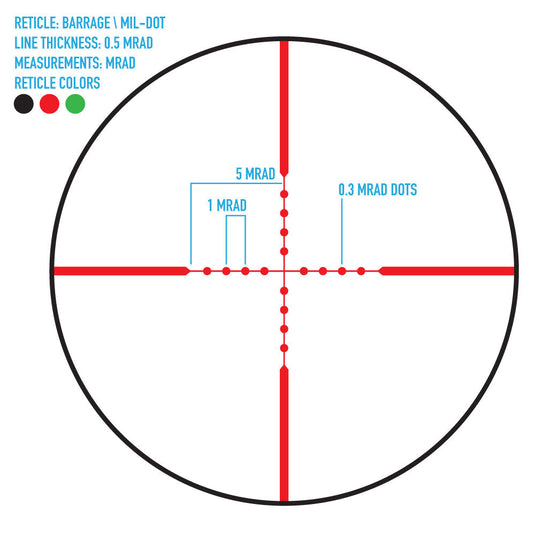
The RapidStrike's 3 MOA dot strikes a practical balance for this context. At 100 yards, 3 MOA subtends roughly 3 inches — precise enough for accurate shooting at any realistic defensive distance, but large enough to find quickly under stress. A dot that is too small can be difficult to locate when your eyes are moving fast and your pulse is elevated. A dot that is too large starts to obscure the target at distance. The 3 MOA size is the result of the same kind of considered tradeoff that runs through the rest of the RapidStrike's design.
The Battery Problem — and How the RapidStrike Solves It
Battery life is the specification that separates optics that are reliable in theory from those that are reliable in practice. The most common failure mode for an electronic optic in a home defense role is not mechanical damage or environmental exposure — it is a battery that has drained because the sight was left on after a range session, or because it simply sat long enough on a low setting that the charge bled out slowly over weeks.
The RapidStrike's battery performance addresses this directly. On its low brightness setting, the sight runs for up to 80,000 hours on a single CR2032 battery. On medium, that figure is 45,000 hours. Even on high — a setting you would only use in direct sunlight — the battery lasts 1,600 hours. To put the low-setting figure in context: 80,000 hours is more than nine years of continuous runtime. A shooter who sets the RapidStrike to low and leaves it powered on does not have a battery management problem. They have an optic that is simply always ready.
The RapidStrike runs on a CR2032 battery, which is among the most widely available battery formats in existence and is loaded via a side-loading tray. The side-loading design matters practically: it means you can swap a battery without removing the sight from your rifle or losing your zero. The tray also keeps the sides of the optic clean — no external extrusion that adds width, creates a snag point, or interferes with a mount. Everything sits flush.
Shake Awake: The Feature That Earns Its Place in a Home Defense Setup
Even a sight with 80,000 hours of battery life benefits from an auto-shutoff feature when it spends most of its time mounted and untouched. The RapidStrike includes Shake Awake technology, which powers the sight down automatically after 15 minutes of inactivity and brings it back online the moment motion is detected — the moment you pick up the rifle.
For a home defense firearm that lives in a safe, a closet, or mounted on a wall, Shake Awake means the shooter never has to think about whether the sight is on. In the 2 a.m. scenario, there is no mode button to locate in the dark, no second of uncertainty about whether the dot is going to appear. The rifle moves, the sight wakes up, and the dot is there. That is the entire value proposition of Shake Awake, and it is a feature that belongs on any red dot sight being used in a role where response time is measured in seconds.
Brightness Settings, Night Vision Compatibility, and Seeing What You Need to See
The RapidStrike offers nine brightness settings: seven daylight levels and two settings designed for use with night vision devices. For a home defense application, the night vision compatibility deserves a specific note. A home defense engagement is far more likely to occur in low-light conditions than in full daylight, and the two NV settings allow the sight to be used alongside dedicated night vision equipment without washing out the image.
But even without night vision equipment, the range of daylight settings serves a practical function: a shooter who takes the rifle to the range, runs it on a high daylight setting, and then returns it to home defense duty without adjusting the brightness will find that the dot is uncomfortably bright in a low-light environment — bright enough to bloom against a dark background and reduce rather than improve target clarity. The seven daylight settings provide enough granularity to dial the dot to the right intensity for the environment, and the Shake Awake feature means the brightness setting the sight powers down on is the one it wakes up with.
IP67 Rating, Fog Proof, Shockproof: What the Durability Specs Mean in Practice
The RapidStrike carries an IP67 rating, which means it has been tested to withstand complete submersion in water up to one meter deep for up to 30 minutes, as well as total protection against dust ingress. The IP67 standard covers both dust and water — a distinction worth noting for a home defense optic that may encounter rain, condensation, or humidity over years of storage and occasional use.
The sight is also fog proof, which addresses a failure mode that is particularly relevant in climate-varied environments: the internal fogging that occurs when a cold optic is brought into a warm, humid space. Fog proofing is achieved through nitrogen purging, which displaces the internal air that would otherwise condense on the lens elements. For a home defense optic that may go from a climate-controlled room to a cold garage to a humid evening, fog proofing is not a luxury specification — it is the difference between a clear sight picture and an unusable one.
Shockproof construction rounds out the durability profile. The RapidStrike is built from 6061-T6 aluminum, the same alloy used across the industry for its combination of strength and light weight. The body weighs 4 oz with the mount included, which means adding the RapidStrike to an AR-15 platform introduces minimal forward weight. For a rifle that spends most of its time stored and is picked up under stress, a light optic is a handling advantage.
Unlimited Eye Relief and Why It Matters When Your Hands Are Moving Fast
Eye relief refers to the distance between the shooter's eye and the rear of the optic at which a full, clear sight picture is visible. Magnified scopes have strict eye relief requirements — position your eye too far back and the image blacks out; too far forward and you risk scope bite from recoil. Red dot sights are non-magnifying, which means they can be designed for unlimited eye relief: any distance, any angle, any head position produces a usable sight picture.
For home defense, unlimited eye relief is not a marginal benefit. A shooter who grabs a rifle in the dark, from a compromised position, while moving through a house is not going to achieve a perfect cheek weld every time. They may shoot from retention, from a low-ready position, or from around a corner with the rifle partially extended. Unlimited eye relief means the optic works in all of those positions. The dot appears, the sight picture is there, and the shooter is not fighting the optic's requirements in addition to everything else.
Platform Compatibility: What Firearms the RapidStrike Mounts To
The RapidStrike uses the Aimpoint T2 footprint, which is one of the most widely supported mounting standards in the industry. Any mount, riser, or plate cut for an Aimpoint Micro T-2 will accept the RapidStrike directly. For AR-15 platform rifles — the most common home defense long gun configuration in the United States — this means the RapidStrike drops onto any standard Picatinny or T2-cut mount without modification.
The high mount included with the RapidStrike is designed to achieve a lower-third co-witness height on a standard AR-15, positioning the dot at a height that allows the shooter to use iron sights through the lower third of the optic's window if the electronic system fails. This is a practical redundancy for a home defense application: the optic is primary, the irons are backup, and the mount geometry keeps both accessible without requiring the shooter to make any adjustments.
For pistol shooters evaluating the RapidStrike as a slide-mounted option, the T2 footprint is compatible with a wide range of pistol optic mounting plates available for popular handgun platforms. The compact dimensions — 2.72 inches in length with the mount, 1.42 inches in width — make it a viable choice for pistol applications where the footprint of the optic is a constraint.
The Lens, the Turrets, and the Details That Separate a Good Red Dot from a Great One
The RapidStrike features a multi-coated 21mm objective lens. Multi-coating refers to the application of multiple anti-reflective layers to the lens surfaces, which increases light transmission and reduces the glare and internal reflections that can degrade image quality in low-light conditions. For a home defense optic that will frequently be used in dim environments, multi-coated glass produces a noticeably cleaner sight picture than uncoated or single-coated alternatives.
The RapidStrike’s turrets are flush-mounted, meaning they sit recessed rather than protruding from the body of the optic. Flush turrets offer two practical advantages. First, they eliminate snag points — there is nothing projecting from the sight body to catch on gear, a holster, a sling, or a case. Second, they are more resistant to incidental impact damage than capped or exposed turrets, because they cannot be struck directly. Windage and elevation adjustment ranges are 120 MOA in each direction, giving the RapidStrike ample travel for zeroing across a wide range of mounting heights and distances.
The parallax is set at 100 yards, which means the dot is parallax-free at that distance — there is no shift in point of impact as the shooter's eye moves relative to the center of the lens. At home defense distances of 5 to 25 yards, the parallax error introduced by the 100-yard setting is negligible, well within the practical accuracy requirements of a defensive engagement.
What Comes in the Box — and Why It Matters
The RapidStrike ships with a high mount, clear flip-up lens caps, a CR2032 battery, a lens cloth, a T15 Torx key, and a 2mm hex key. This is worth noting because an affordable red dot sight that requires additional purchases before it is operational adds hidden cost to its price point. The RapidStrike arrives ready to mount and zero without a trip to a hardware store.
The clear flip-up lens caps deserve specific attention in the context of home defense. Flip-up caps keep the lens surfaces protected during storage without requiring the shooter to remove them before using the sight — flipping them out of the way is a single motion that takes less than a second. Clear caps go one step further: they allow the sight to be used even if the caps are not flipped, which means a shooter who grabs the rifle and forgets to clear the caps still has a functioning optic. The lens cloth in the kit keeps the glass clean between uses, which matters for image quality more than it might seem — a smudged lens degrades the dot's clarity in low light conditions.
An Affordable Red Dot Sight That Does Not Ask You to Compromise
The phrase "affordable red dot sight" carries an implicit qualifier in most conversations: affordable for what it is, with the understood caveat that what it is comes with limitations. The RapidStrike challenges that framing. IP67 waterproofing, fog proofing, 6061-T6 aluminum construction, multi-coated glass, Shake Awake, 80,000-hour battery life on low, nine brightness settings with two NV modes, flush turrets, unlimited eye relief, and an Aimpoint T2 footprint are not a feature list assembled to justify a budget price point. They are a feature list assembled to build a specific kind of optic — one that works when it is needed, without ongoing maintenance or management from the shooter.
At $99.97, the RapidStrike lands at a price point that makes it accessible to first-time AR-15 optic buyers who are building out a home defense platform without a large equipment budget, as well as experienced shooters who want a capable backup optic or a dedicated home defense sight that does not pull from the budget they have allocated to a precision or competition build. In both cases, the question the RapidStrike answers is the same: what does a red dot sight need to do to be trusted in the one situation where trust is not optional?
The answer the RapidStrike gives is: be on, be clear, be ready, and stay that way regardless of how long it has been since you last touched it. That is the spec sheet that matters at 2 a.m. Everything else is secondary.
Frequently Asked Questions
What makes a red dot sight better than iron sights for home defense?
A red dot sight simplifies the aiming process by eliminating the need to align front and rear sights. Instead, the shooter only needs to place the dot on the target. This allows for faster target acquisition, better situational awareness with both eyes open, and more effective performance in close-range, high-stress situations.
How long does the Firefield RapidStrike battery actually last?
On the lowest brightness setting, the RapidStrike can run up to 80,000 hours on a single CR2032 battery. Even at medium settings, it reaches around 45,000 hours. This means the optic can remain powered on for years without requiring frequent battery changes.
What is Shake Awake and why does it matter?
Shake Awake automatically turns the optic off after a period of inactivity and instantly turns it back on when movement is detected. This ensures the sight is always ready without requiring manual activation, which is critical in a home defense scenario where response time matters.
Is the RapidStrike durable enough for long-term home defense use?
Yes. The optic is built from 6061-T6 aluminum and carries an IP67 rating, meaning it is dustproof and water-resistant up to one meter for 30 minutes. It is also fog proof and shockproof, ensuring reliable performance across different environments and conditions.
What firearms is the RapidStrike compatible with?
The RapidStrike uses the Aimpoint T2 footprint, making it compatible with a wide range of mounts and platforms. It is commonly used on AR-15 rifles with standard Picatinny rails, and it can also be mounted on pistols using appropriate adapter plates.
Does brightness setting matter for home defense?
Yes. A dot that is too bright in low-light conditions can bloom and reduce clarity. The RapidStrike offers multiple brightness settings, including night vision modes, allowing users to adjust the dot intensity for their environment and maintain a clear sight picture.