
How Binoculars Make New Hunters Better
You can learn a lot about hunting before you ever touch the trigger. A decent pair of binoculars gives a first-timer something useful to do while teaching them how to spot game, read terrain and slow down.
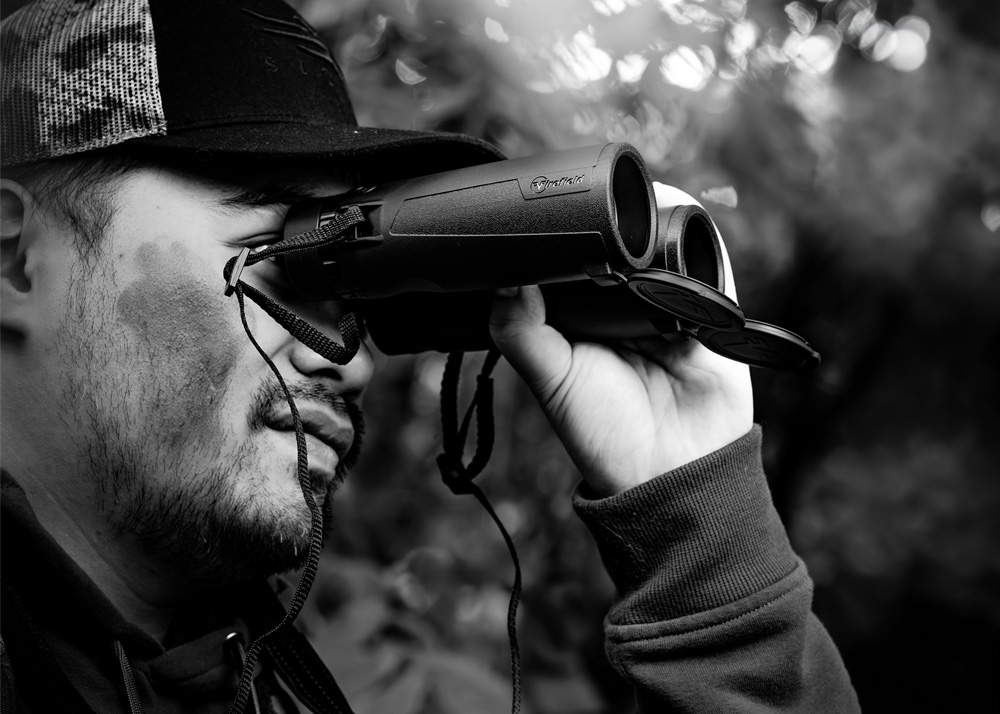
Hunting takes patience. Nobody develops much of it by sitting around waiting to be told what happens next.
That's where binoculars come in. A pair like the Firefield Verge 8x42 or Verge 10x42 gives a new hunter a real job in the field, even if someone else is carrying the rifle.
Before that first hunt, it helps to know how to set a pair up, how to scan without whipping past everything worth seeing, and what numbers like 8x42 actually mean.
Start with 8x42 if you want an easier handheld view and a wider field of view. Go with 10x42 if you'll spend more time looking across open country and want the extra magnification.
Why binoculars matter before the shot
New hunters naturally spend a lot of time thinking about shooting. They should. Marksmanship takes practice, and safe gun handling deserves even more attention. But most of a hunt happens before anybody pulls a trigger.
A lot of that time is spent glassing. You're checking a field, tree line or ridge for movement and trying to figure out what you're actually looking at.
Without binoculars, a dark shape at the edge of a field can stay a dark shape. Is it a deer or a fence post? Is it moving? Buck or doe? Is there brush in the way? Binoculars let you answer those questions before the rifle ever comes up.
That's especially useful for someone on a first hunt. A beginner already has plenty to think about. Give them binoculars and they can take part without also having to manage a firearm. They get to watch how an experienced hunter reads the ground and, more importantly, start doing some of that work themselves.
Give the new hunter the binoculars
Spotting isn't busywork. A spotter watches a defined piece of terrain, picks up movement, checks for obstructions and tells the shooter what they're seeing.
Say you're set up on a hillside above a field. Give the spotter one section to watch instead of telling them to stare at everything at once. When they see movement, have them call out the direction, approximate distance and what the animal is doing. The shooter can then find the same animal through a scope or iron sights.
For a kid or first-time hunter, this works well because they aren't stuck on the sidelines. They have something to pay attention to. They'll also find out pretty quickly that hunting involves a lot of sitting still and watching places where nothing appears to be happening.
Give them a piece of ground
Don't tell a beginner to "watch the field." Give them a fence line, patch of brush or section of timber and have them work that area slowly.
How to use binoculars in the field
Looking through binoculars is easy. Getting a steady, useful view takes a little setup.
Set the eyecups
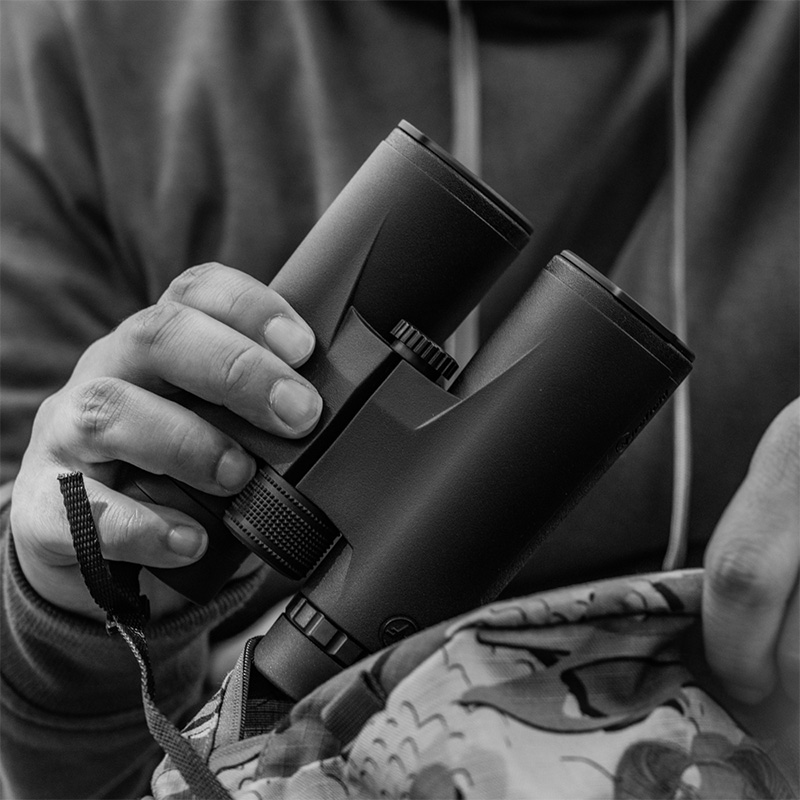
The Verge uses twist-up eyecups. If you wear glasses, twist them down. If you don't, extend them until the binoculars sit comfortably against your face and you can see the full image without dark edges getting in the way.
Fit the binoculars to your eyes
The two barrels hinge in the middle. Move them closer together or farther apart until the two images merge into one clear circle. That's your interpupillary distance, which is simply the spacing between your eyes.
Get the focus right
Use the center wheel to bring the image into focus. Pick something at a moderate distance and turn the wheel until the details sharpen up.
If one eye still looks a little soft, use the diopter adjustment on the right eyepiece. It compensates for differences between your eyes. Once you've got it set, you can usually leave it alone.
Slow down when you scan
One of the easiest beginner mistakes is sweeping the binoculars back and forth like you're looking for somebody in a crowded parking lot. Slow down.
Start on one side of the area you're watching and move across it. Drop the view slightly, then come back the other way. Keep overlapping each pass. You're much more likely to catch an ear moving in the brush or the line of a deer's back if you give your eyes time to look.
Find something to brace against
Your hands shake. At 8x or 10x, you'll see it. Rest your elbows on your knees when you're sitting, lean against a tree when you're standing, or use any other solid support that gives your arms a break. The neck strap also keeps you from holding the binoculars every second you're out there.
What 8x42 and 10x42 actually mean
The Verge comes in 8x42 and 10x42. Those numbers tell you the magnification and the size of the objective lenses.
The first number is magnification
An 8x binocular gives you 8x magnification. The 10x42 gives you 10x. The extra power sounds like an automatic upgrade until you try holding both steady.
Magnification also makes your hand movement easier to see. A little shake at 8x becomes more obvious at 10x. That's one reason 8x42 tends to be easier for a beginner or younger user who's going to spend a long time glassing by hand. If you're looking across big fields or open ridgelines, 10x gives you more detail farther out.
The 42 is the objective lens size
Both Verge models use 42mm objective lenses. Those are the big lenses at the front. Objective diameter affects how much light the binoculars can gather, and 42mm is a common hunting size because it gives you useful light gathering without making the binoculars enormous.
That matters around dawn and dusk, when hunters tend to care most about getting a bright view.
Exit pupil
You can get the exit pupil by dividing the objective diameter by the magnification. On an 8x42, 42 divided by 8 gives you about 5.2mm. On a 10x42, it's 4.2mm.
Exit pupil is the diameter of the beam of light reaching your eye. In bright daylight, your pupil may be around 2 to 3mm. In low light it can open to 5mm or more. That gives the 8x42 a small advantage around dawn and dusk because its larger exit pupil is closer to what a dilated eye can use.
Field of view
Field of view tells you how much ground you can see at once, usually measured in feet at 1,000 yards. Lower magnification generally gives you a wider view.
For a beginner, that wider picture can make finding and following an animal easier. It also helps when you're hunting closer cover and don't need as much magnification in the first place.
Fully multicoated lenses
The Verge uses fully multicoated lenses. Those coatings cut down on reflections that would otherwise cost you some light and image brightness. In plain English, they help more of the available light make it through the glass and to your eyes.
Which Verge should you take hunting?
For a first hunt, the choice mostly comes down to how steady the user is and how open the country will be.
Usually easier for a first-time spotter to hold steady. It also gives you a wider field of view and the larger exit pupil.
The better fit when you're regularly glassing farther across fields, hillsides or clear-cuts and want more magnification.
If you're handing the binoculars to a young spotter, or anybody who's going to glass for a long time without a tripod or solid rest, the 8x42 is forgiving. There's less visible shake and more ground in the image.

Firefield Verge 8x42 Binocular
A sensible first pair for handheld hunting use when steadiness and field of view matter more than squeezing out another 2x of magnification.
The 10x42 makes more sense when the country opens up. Think agricultural fields, hillsides or a clear-cut where the interesting thing you're looking at may be several hundred yards away. If you need to decide whether that shape at 400 yards is worth a closer look, the extra magnification has a job to do.

Firefield Verge 10x42 Binocular
Extra magnification for open ground where you're more likely to spend your time looking farther out.
Both Verge models use durable polycarbonate bodies, carry an IPX4 water-resistance rating and come with a lanyard and carrying case. That's useful gear for something that's going to spend its life getting carried through brush, set on tailgates and passed back and forth in a blind.
Start them with the glass
A new hunter doesn't need to spend the whole first outing waiting for somebody else to tell them when the interesting part starts. Put the binoculars in their hands and give them an area to watch.
They'll learn to slow down. They'll start noticing movement they would've missed before. They'll also get used to checking what they're looking at before anybody acts on it. That's a useful habit to have long before they take their first shot.
- For most beginners, start with 8x42. It's easier to hold steady and gives you a wider view.
- Use 10x42 when the country opens up. The extra magnification helps when you're trying to identify game farther away.
- Teach a scanning pattern. Slow, overlapping passes beat swinging the binoculars around and hoping something catches your eye.
The Firefield Verge 8x42 and 10x42 both give a first-time hunter a straightforward way to get involved. Pick the magnification that fits the ground, hand them a section to watch and let them start looking.
Pick your Verge
Go 8x42 for easier handheld glassing. Pick 10x42 when you need more reach across open country.