
Red Dots, Eye Relief, and You
We were all new gun owners once. Don't act like you weren't. And if you're being honest with yourself, you'll admit that at some point during that wide-eyed, wallet-open phase of your firearms journey, you were seriously tempted by something strange. Something that would make you “special,” unlike every other gun owner and his tricked-out AR-15. We've all been there, standing in the gun store or doom-scrolling GunBroker at two in the morning, transfixed by a rifle that costs less than a decent dinner out but promises to change your life.
I, for one, bought an M1A.
For those unfamiliar, the M1A is Springfield Armory's civilian, semi-automatic answer to the venerable M14, the battle rifle that served the United States military through the 1960s and beyond. It fires a hard-hitting 7.62x51mm NATO round, handles with a kind of intuitive ergonomic logic that makes you feel like you were born to run it, and it's considerably more compact than the military platform that inspired it. Nobody wants full auto on one of these things, anyway. Trust me on that.
The M1A is, in many respects, a genuinely great rifle. The problem, however, arises the moment you try to mount a conventional scope on it.
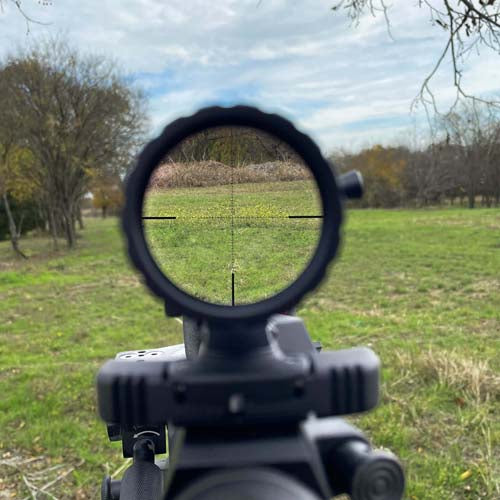
You see, as the M1A ships from Springfield, the rail system sits a little too far forward on the receiver to achieve what's called proper eye relief. Eye relief, for those still in the honeymoon phase of rifle ownership, refers to the distance between your eye and the rear lens of a scope at which the full, clear sight picture appears. Too far away and you're staring into a dark tunnel. Too close and you've just invented a new way to give yourself a crescent-shaped scar on your forehead, affectionately known in shooting circles as "scope bite." Every traditional scope has an optimal eye relief range, usually somewhere between three and four inches, and if your mounting system won't let you position the scope within that range, you and your new optic are simply not going to get along.
This is precisely why, if you spend any time on forums or at the range, you'll notice that M1A owners tend to run red dot sights rather than traditional scopes. Occasionally, you'll spot a scope on one of these rifles, but when you do, you're almost certainly looking at one of two things: either a scout scope, which is a long eye relief optic specifically engineered to be mounted far forward on the rifle and used at arm's length, or a traditional scope sitting on an aftermarket adapter that repositions it closer to the shooter's eye. Both solutions work, but both require either extra research, extra money, or, in the finest tradition of the gun-owning community, a fair amount of bot
The author's M1A with a scout scope.
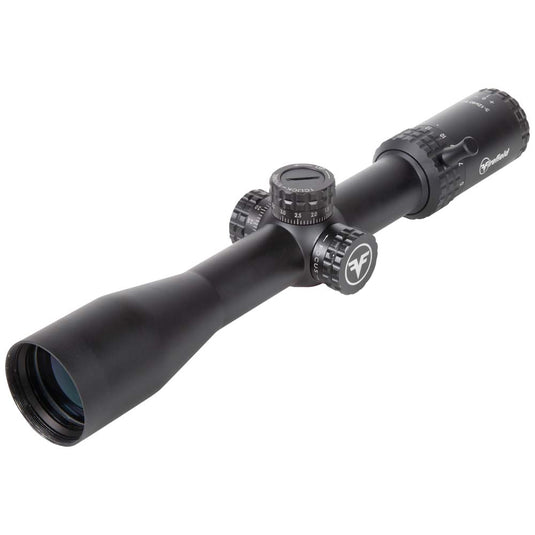
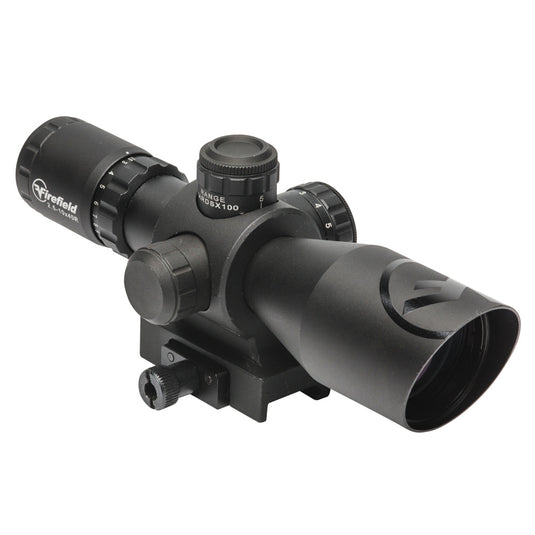
If you find yourself in the same situation that plagues a good portion of stock M1A owners or if you happen to own a different kind of rifle that has a rail far away from your face, the simpler and more elegant path forward is to invest in a red dot sight, and specifically, the Firefield Rapidstrike Red Dot.
The Rapidstrike is a compact, no-nonsense optic built from 6061-T6 aluminum, which is the same grade of aluminum that has no business being this light but somehow manages it anyway. The sight alone weighs just 4.06 ounces, and even with the included high mount attached, you'd only be looking at 5.08 ounces total. For reference, that is substantially less than the existential weight of buyer's remorse that accompanies a bad optic purchase. Its dimensions are equally unobtrusive at 2.72 x 1.42 x 1.61 inches without the mount, meaning it won't dramatically alter the already excellent handling characteristics of your M1A.
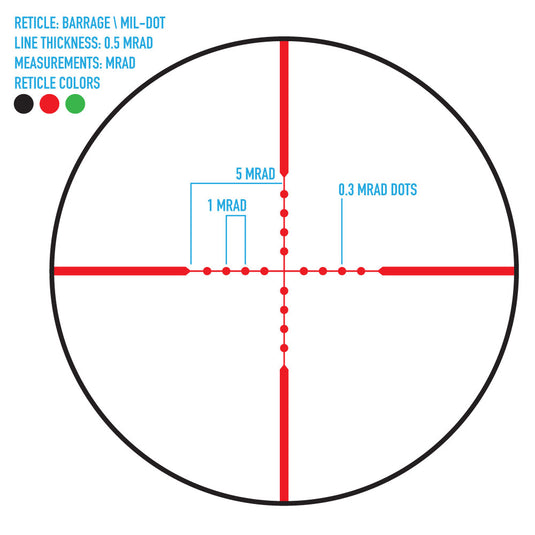
The reticle is a crisp 3 MOA red dot, which strikes a sensible balance between the precision of a smaller dot and the speed of a larger one, and it offers 19 brightness settings across 9 daylight levels and 2 dedicated night vision settings, so you're covered whether you're shooting in bright afternoon sun or working in low light. Adjustments are straightforward at 1 MOA per click with a generous 120 MOA of total windage and elevation travel, and the parallax is set at 100 yards, which is a sensible zero for most general-purpose shooting. It also runs on a common CR2032 battery, which you can find at any gas station or pharmacy. Battery life is rated at 1,600 hours on high, 45,000 hours on mid, and a genuinely absurd 80,000 hours on low, so if you forget to turn it off, you'll probably be fine. The sight will actually handle that oversight for you, because the Rapidstrike features Shake Awake technology, which automatically powers the optic down after 15 minutes of inactivity and wakes it back up the moment it detects movement. It's the most responsible member of your kit.
The Rapidstrike is also rated IP67 for water and dust resistance, is nitrogen-filled to prevent internal fogging, and is rated shockproof up to 1,200 G of recoil force. The 7.62x51mm NATO round your M1A is throwing generates nowhere near that figure, so the sight will outlast your complaints about it with ease. Multicoated lenses round out the package, improving light transmission and keeping your sight picture clean across varying light conditions.
But the real reason the Rapidstrike solves your hypothetical M1A problem specifically comes down to a fundamental quirk of how red dot sights work: they offer unlimited eye relief, which is, in the context of this specific mounting issue, the most beautiful phrase in the English language.
Unlike a traditional magnified scope, a red dot sight doesn't project its aiming point through a series of lenses that require your eye to be at a precise distance to function correctly. Instead, it uses a single coated lens to reflect an LED-generated dot back toward the shooter. Because the dot is a reflection rather than an image projected through a focal system, your eye doesn't need to be at any particular distance from the lens to see it. You can shoot with your cheek welded to the stock or with your head slightly lifted, with the sight mounted near or far, and the dot will be right there waiting for you regardless. There is no sweet spot to find, no dark tunneling, and absolutely no opportunity for the optic to rearrange your eyebrow.
That's the practical genius of the red dot for rifles like the M1A: rather than engineering around the platform's mounting constraints, the Rapidstrike renders those constraints irrelevant. Mount it wherever the rail allows, shoulder the rifle naturally, and get on with the business of shooting accurately.
So yes, we were all new gun owners once, and some of us made interesting choices along the way. But with the Rapidstrike on that M1A, at least one of those choices might actually turn out to have been a pretty good one.