
Why Every Shooter Should Own a Spotting Scope Before Their Next Range
Every range day starts the same way: rifles get lined up, targets are set, and shooters lean over benches trying to make out tiny holes in the paper a hundred yards away. Someone squints through their optic and swears they hit the bullseye; someone else claims the shot went high. Only when the range goes cold after ten minutes can someone finally walk downrange to check. That’s ten minutes wasted, and ten more before the next shooter gets it right.
The truth is, even a powerful rifle scope isn’t designed for long-term observation or reading fine detail at a distance. You can’t efficiently call your shots through a 12x optic. That’s where you need a spotting scope.
What a Spotting Scope Actually Does
A spotting scope is essentially a high-magnification telescope built for clarity, precision, and detail. It bridges the gap between your rifle scope and a full-sized telescope—compact enough to carry, powerful enough to see exactly where your bullet landed at 100, 300, or even 500 yards.
Unlike a rifle scope, a spotting scope isn’t bound to your shooting position. It’s meant to sit on its own tripod, free to focus entirely on the target while you stay on the gun. Compared to binoculars, it offers higher magnification and far greater stability, making it the spotter’s best friend—able to detect heat mirage, trace, and subtle movement the naked eye or a riflescope can’t.
The Range-Day Advantage
When you’re zeroing a rifle or testing loads, a spotting scope does the work that binoculars and guesswork can’t, such as:
-
Faster zeroing: Instead of firing a group and walking downrange to check, you can watch the impacts live through the spotting scope. That means quicker corrections, fewer wasted rounds, and less frustration.
-
Ammo savings: Being able to see your hits (and misses) immediately means you can record precise point-of-impact shifts and adjust your scope between shots instead of wasting rounds trying to “walk” bullets into the target. You’ll spend less time firing blind groups, fewer trips downrange, and more time refining your zero with measurable, consistent results.
-
Teamwork: A spotter behind a scope can call adjustments precisely, saying “half MOA left” instead of “I think you’re off somewhere high.” A shooter won’t be able to see everything because recoil moves the rifle off target the instant the shot breaks. Even with a stable rest, muzzle jump and eye relief make it hard to spot impact through the same optic used to fire. The spotter, on the other hand, stays locked on the target through a high-magnification spotting scope that never moves. They can watch the bullet’s flight, catch the dust or splash where it lands, and call exact corrections while the shooter resets—something the person behind the trigger simply can’t do from their limited, shaking viewpoint.
Picture this: you’re dialing in a new rifle at 200 yards. You take your first shot and your spotter calls, “Impact, two inches low.” By the next round, you’re dead center. Without a spotting scope, that might’ve been a half box of ammo and a long walk just to confirm.
Beyond the Bench: Field Use for Hunters
Hunters use spotting scopes to find, identify, and plan. Before a shot ever happens, they glass ridgelines, open fields, and far-off treelines to locate game without stomping through the area and spooking it. A good scope lets them study behavior such as how long a buck stays in one clearing, which trail a herd favors, or whether that shadow on the next hill is worth a half-mile stalk. Spotting scopes also help size antlers or confirm species at long distance, saving time and energy. When it’s time to move, hunters use the same scope to keep eyes on their target as they close the gap, picking safe, quiet routes through the terrain. In open country, that ability to observe from far away is often the difference between a full tag and an empty pack.
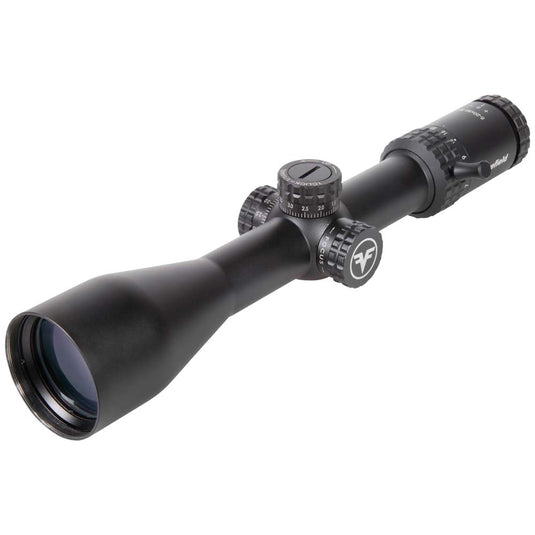
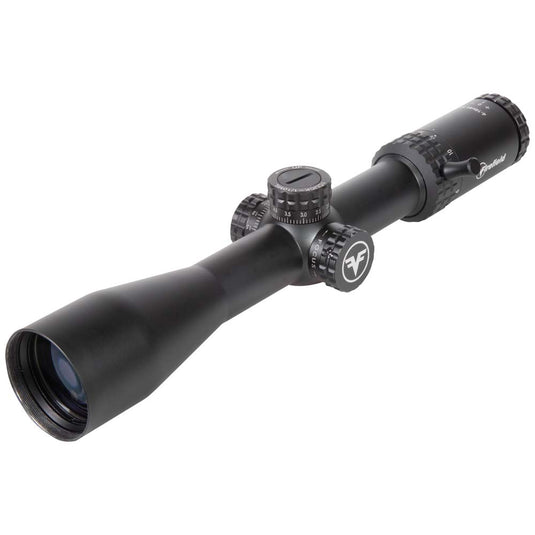
Firefield spotting scopes are built with rugged housings and coated optics designed for backcountry abuse. Whether you’re glassing from the bed of a pickup or the side of a mountain, they’re light enough to carry and durable enough to keep working after a fall or two.
What to Look for in a Spotting Scope
If you’ve never owned one, spotting scopes can seem complicated—but they’re not. A few key specs make all the difference:
-
Magnification range: Look for something in the 20–60x range. Lower magnification gives you a wider field of view, higher helps you identify fine details.
-
Objective lens size: The bigger the front lens, the more light your scope gathers. More light means a brighter, clearer image—especially at dusk or dawn.
-
Eye relief: If you wear glasses or plan to spend long sessions behind the glass, generous eye relief will save your eyes from strain.
-
Tripod compatibility: Don’t skip the tripod. Even the steadiest hands can’t hold a spotting scope still at 60x.
Firefield’s spotting scopes hit that balance—solid magnification, dependable clarity, and affordable enough that you won’t feel like you’re babysitting your gear all day.
Making the Most of It
To get the most from your spotting scope, treat it like part of your shooting system. Set it up on your bench or next to your shooting mat so you can glance through it without breaking position. Align it parallel to your target line and focus carefully until the bullet holes are crisp.
As you shoot, you’ll start to notice more than hits—you’ll see mirage, the shimmering of heat that tells you wind direction and speed. You’ll spot trace, that faint blur that follows a bullet through the air. Learn to read those, and your accuracy will jump overnight.
Keep your lenses clean, use a soft cloth instead of your sleeve, and store the scope in a dry bag when not in use. Treat it well, and it’ll outlast the rifle you zeroed it with.
Don’t Shoot Blind
Every shooter eventually learns the hard way: you can’t hit what you can’t see. A spotting scope saves you time, money, and frustration—and teaches you more about your own marksmanship in the process. Whether you’re benchrest shooting, hunting open country, or helping a buddy dial in his rifle, it’s the one tool that gives you certainty when it matters most.
See your shots the moment they land. Take the guesswork out of your next range day with a Firefield spotting scope and make every round count.
Frequently Asked Questions
Why do shooters use spotting scopes instead of rifle scopes to see their shots?
Rifle scopes aren’t designed for long observation or resolving small details at distance. A spotting scope provides much higher magnification and stability, letting shooters see bullet impacts clearly without leaving the firing line.
What advantages does a spotting scope offer during zeroing?
A spotting scope allows you to watch impacts in real time, make immediate corrections, and save ammo. There’s no need to wait for the range to go cold or walk downrange to confirm hits.
Can a spotting scope help hunters in the field?
Yes. Hunters use spotting scopes to locate game, study behavior, confirm species, size antlers, and plan stalks from far away without alerting animals. They’re essential for glassing large areas efficiently.
What magnification should I look for in a spotting scope?
A 20–60x magnification range covers most shooting and hunting needs. Lower magnification gives a wide field of view, while higher settings help identify fine details at long distances.
Do I need a tripod for my spotting scope?
Yes. Spotting scopes require a tripod for steady viewing, especially at high magnification. Even the steadiest hands can’t hold 40–60x power still enough for clear observation.