
What to Look for in a Home Defense Optic
Walk into a gun store and ask someone to help you pick an optic for home defense, and you might end up getting a 30-minute lecture about the battle between LPVOs, red dots, and prism optics. That’s not what you need. Home defense is its own thing — specific distances, specific conditions, specific demands — and the optic that's perfect for ringing steel at 500 yards is probably the wrong choice for protecting your family at 2 AM.
The good news is that home defense optics don't need to be complicated or expensive. You just need to know what actually matters. Here's what to look for.
Magnification: Less Is More — Usually Zero
If there's one feature that new buyers over-invest in, it's magnification. Zooming in sounds useful until you realize that the average home defense scenario plays out at ranges well under 30 yards — more likely under 10. At those distances, magnification doesn't help you; it actively hurts you by narrowing your field of view exactly when you need to see as much as possible.
A 1x red dot sight gives you no magnification and all of the advantages that come with it: a wide, clear picture of everything in front of you, fast target acquisition, and none of the disorienting tunnel-vision effect you get when you zoom in on a threat that's standing ten feet away. For home defense, that's the right trade-off every time.
Some shooters opt for a low-power variable optic (LPVO) set permanently to 1x, and that's a reasonable choice if you want flexibility. But for a dedicated home defense setup, a 1x red dot is simpler, lighter, and faster — and simplicity matters a lot when the stakes are high.
Both Eyes Open: The Red Dot Advantage New Shooters Don't Expect
If you learned to shoot with iron sights or, at the very least, watched someone else do it, you probably picked up the habit of closing one eye to aim. That works fine for iron sights, but it gives up half your vision at the moment you can least afford to. You lose depth perception, peripheral awareness, and the ability to track movement outside your immediate line of fire.
The very reason why you should be getting a red dot at all is that you want to be both fast and accurate during a home defense scenario. Iron sights will make you accurate, but they will definitely not make you fast, since without muscle memory, you may fail to align your sights.
Red dot sights change this completely. Because the dot is projected onto the target plane and is parallax-corrected — meaning it stays on target regardless of exactly where your eye is behind the optic — you can aim with both eyes fully open. Your brain overlays the dot onto the scene your dominant eye sees through the optic while your non-dominant eye keeps watching everything around it.
In a home defense situation, situational awareness is everything. Knowing what's behind a threat, whether someone else is in the room, or whether a family member just came around the corner — those things matter enormously. Keeping both eyes open gives you that awareness. It's one of the most meaningful practical advantages a red dot offers over iron sights or traditional scopes, and it's one that new shooters are often genuinely surprised by the first time they experience it at the range.
Dot Size: Big Enough to Find Fast
Dot size on a red dot sight is measured in MOA — Minute of Angle. Without going too deep into the math, what it means practically is this: a 1 MOA dot covers 1 inch of your target at 100 yards. A 5 MOA dot covers 5 inches at the same distance, but that means little for shooting a man from across the hall.
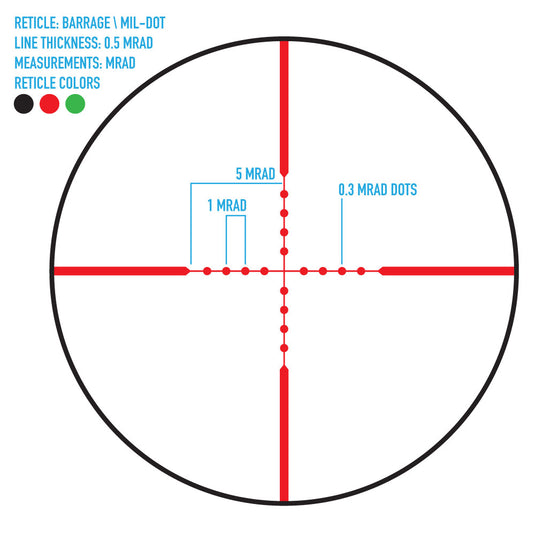
Smaller dots are better for precision shooting at a distance. Larger dots are better for finding your aiming point quickly at close range. Since home defense is a close-range scenario (and since adrenaline tends to turn fine motor skills into mush), a large 4 or 5 MOA dot is the smarter pick. It jumps into your field of view fast, it's easy to see even under stress, and at the distances involved, it's still plenty accurate.
Shooters with astigmatism also often find larger, dimmer dots more usable, since they tend to distort less than smaller ones. If you've ever looked through a red dot and seen a starburst or smear instead of a clean dot, dot size and brightness adjustment can both help — and a 5 MOA dot is generally more forgiving than a 1 or 2 MOA option.
Brightness Settings: One Optic for Every Condition
You’ll never know when you’ll need your home defense firearm. It might be high noon on a bright summer day, or it might be 3 AM in a completely dark hallway with no lights on. A good home defense optic needs to handle both of those situations and everything in between.
That means multiple brightness settings are not a luxury. An optic with only one or two brightness levels is going to leave you either squinting to find a washed-out dot in daylight or half-blinded by an overpowered dot at night. Look for an optic with a wide range of settings that go way down for darkness and crank way up for bright outdoor conditions.
Some optics also include night-vision-compatible brightness modes, which sit below the standard visible range. If you're running any kind of night vision device — even a budget monocular — that compatibility matters. But at minimum, make sure you have enough range to be effective in any lighting condition you might actually encounter.
Durability: Shotgun-Rated and Built to Hold Zero
A lot of people setting up a home defense firearm reach for a 12-gauge shotgun first, and for good reason — it's reliable, effective, and widely available. But 12-gauge recoil is notoriously hard on optics. Many red dot sights that work perfectly on an AR-15 will lose zero, develop internal rattles, or fail outright after a few hundred rounds through a pump or semi-auto shotgun.
If you're running a shotgun — or if there's any chance you might put your home defense optic on one later — make sure it's explicitly rated for 12-gauge recoil. Not just "durable" in general, but specifically tested and rated for the kind of punishment a shotgun produces. An optic that holds zero through thousands of 12-gauge rounds is an optic you can trust to be in the same place it was when you last checked it.
Zero retention — meaning the optic stays zeroed even after recoil, handling, and time — is the practical measure of durability that actually matters for home defense. A beautiful-looking optic that drifts half an inch after a few rounds is worse than useless. It's dangerous.
Battery Life and Shake-Awake: Ready When You Are
Here's a scenario nobody talks about enough: your home defense firearm has been sitting in a safe or on a shelf for six months. You haven't touched it. The optic has been sitting dormant the whole time. At 2 AM, you grab it in a hurry. Is the battery dead?
Home defense gear has a unique relationship with time that hunting gear and range gear don't. It sits idle — sometimes for a very long time — and then it needs to perform instantly and perfectly. That puts a premium on two things: long battery life and shake-awake technology.
Shake-awake is a motion-activated feature that wakes the optic up automatically when you pick up the firearm. It goes back to sleep when it detects no movement, conserving battery without requiring you to manually power it off and on. The practical result is that the optic is almost always on and ready when you grab the gun, without draining the battery during the days or weeks it goes untouched. It's a small feature that carries a lot of weight in a home defense context — because remembering to turn on your optic under stress is exactly the kind of step you don't want to rely on.
Pair shake-awake with a long battery life — measured in thousands of hours on lower brightness settings — and you've got an optic that's reliably ready even if it's been sitting untouched for a long stretch.
Mounting and Compatibility: Keep It Simple
For most home defense setups, mounting doesn't need to be complicated. A standard Picatinny or Weaver rail mount is what you'll find on the vast majority of AR-15s, modern shotguns, and home defense rifles — and most quality red dot sights mount directly to those rails without any adapters required.
The important thing is that the mount is secure. A loose optic on a home defense firearm is a serious problem. Use thread-locking compound on the mounting screws, check it periodically, and don't assume it's staying put just because it felt tight when you installed it. This is especially true on shotguns, where recoil cycles are more violent than on most rifles.
If you're running both a rifle and a shotgun and want one optic to serve both platforms, look for a sight that's explicitly rated for both — meaning it can handle the recoil of each without issue. That's not a guarantee you can make about every optic on the market, so it's worth verifying before you mount the same sight on a 12-gauge that you've been running on a .223.
Price vs. Value: You Don't Need to Spend $600 to Trust Your Life to It
There's a persistent belief in shooting communities that your optic needs to cost more than your firearm to be trustworthy. This idea gets repeated so often that a lot of new shooters either overbuy on optics they don't need, or skip the optic entirely because they assume they can't afford something reliable.
Both outcomes are unfortunate, and neither is necessary. The features that matter for home defense — 1x magnification, a large dot, multiple brightness settings, solid construction, shake-awake, long battery life, and a recoil-rated mount — are not features that require a $500 price tag. They exist in well-designed, well-built optics at accessible price points.
What you're paying for at the high end is often marginal optical clarity improvements, brand prestige, and features relevant to professional military or law enforcement applications. For a homeowner with a shotgun or AR in the closet, those extras don't translate into meaningful performance gains. A properly designed budget optic that holds zero, wakes up when you grab it, and shows you a clear dot is doing its job.
The Firefield RapidStrike Red Dot: Built for Exactly This
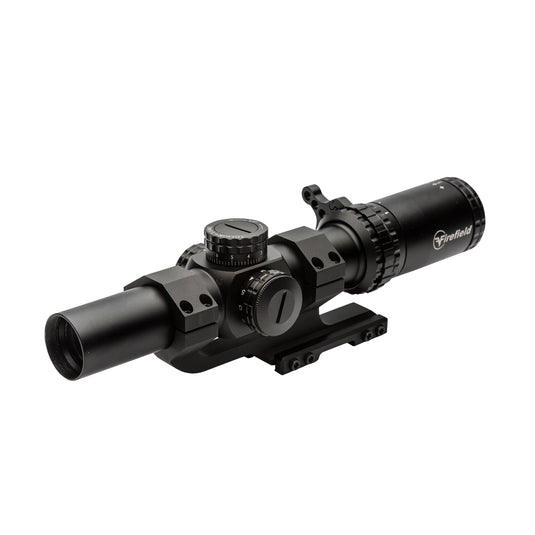
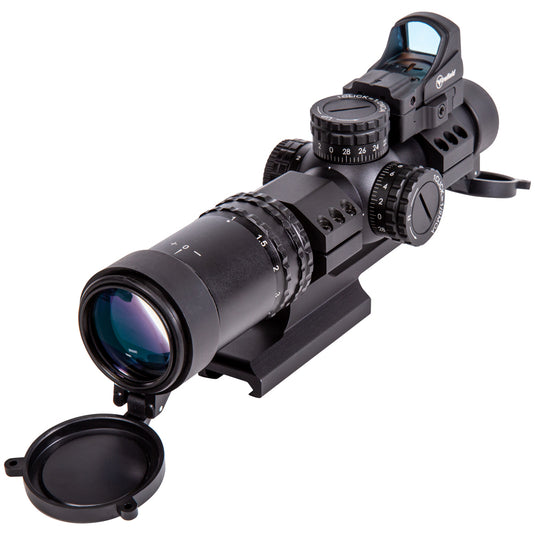
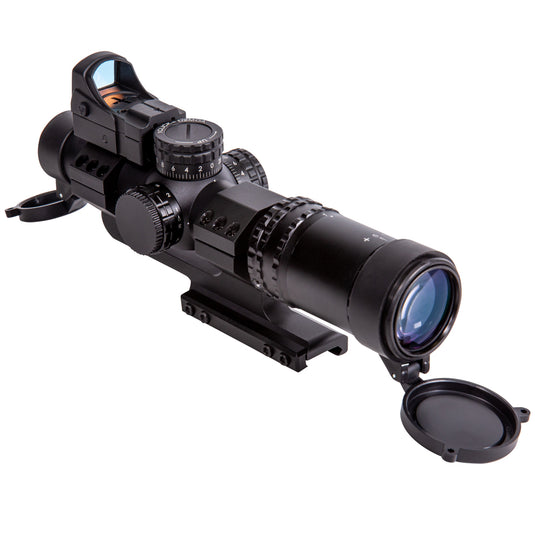
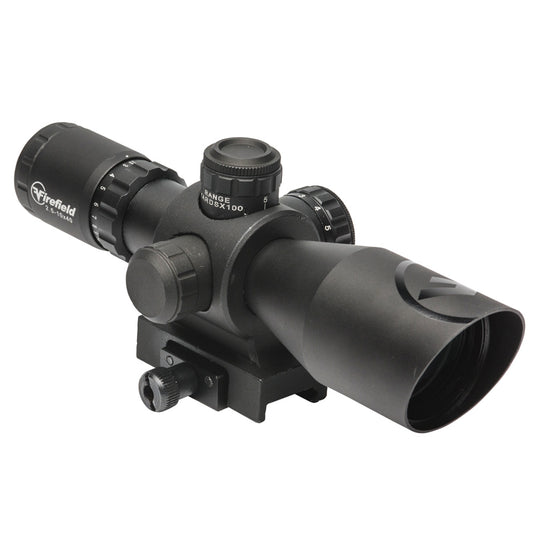
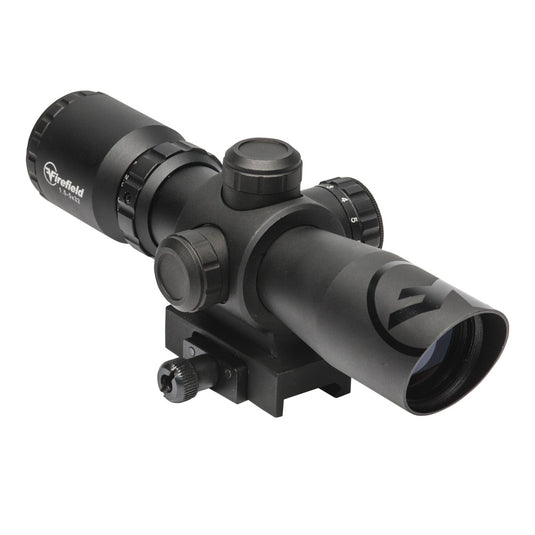
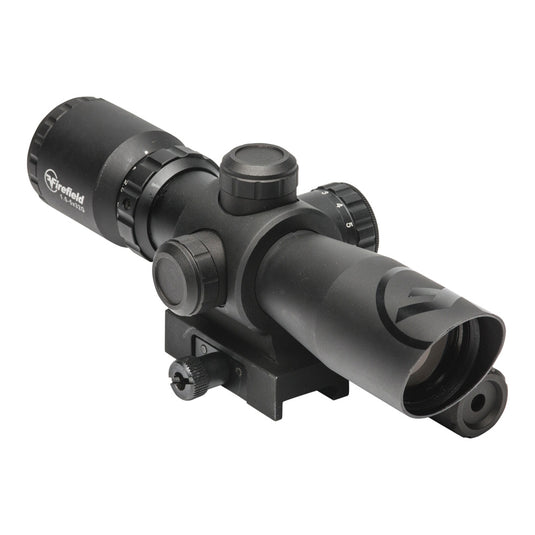
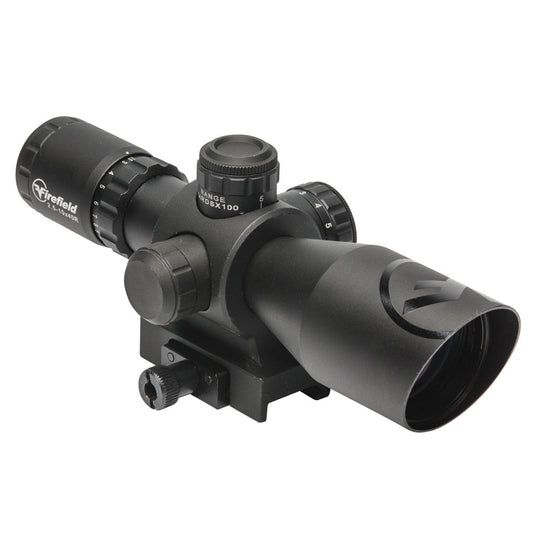
If you've been following along, you know what you're looking for now: 1x magnification, a 4-5 MOA dot, wide brightness range, rock-solid durability, shake-awake, long battery life, and solid recoil ratings across platforms. The Firefield RapidStrike Red Dot checks every one of those boxes.
It's built for both-eyes-open shooting with a clean, unobstructed sight picture that makes target acquisition fast at close range. The 5 MOA dot is sized exactly right for home defense distances — big enough to find instantly under stress, accurate enough for every range at which this optic will realistically be used. Multiple brightness settings take you from pitch-dark hallway to full afternoon sunlight without any guesswork.
Crucially for shotgun owners, the RapidStrike Red Dot is rated for 12-gauge recoil — meaning you can mount it on your home defense shotgun with confidence that it'll stay zeroed through the long stretches of storage and the occasional range session to stay sharp. Shake-awake ensures it's live the moment you grab the firearm, and the battery life means you're not playing the guessing game of when you last changed it.
Firefield built the RapidStrike Red Dot to be exactly what this article describes: a capable, reliable home defense optic at a price that doesn't punish you for being a responsible first-time buyer. If you're setting up your first home defense firearm — or upgrading an existing one — it's a straightforward choice.
Shop the Firefield RapidStrike Red Dot at firefield.com.
Frequently Asked Questions
What type of optic is best for home defense?
A 1x red dot sight is generally the best choice for home defense. It provides a wide field of view, fast target acquisition, and allows you to shoot with both eyes open, which improves awareness in close-quarters situations.
Is magnification useful for a home defense firearm?
No. Most home defense encounters occur at very short distances, often under 10 yards. Magnification narrows your field of view and can make it harder to react quickly, which is why a non-magnified optic is preferred.
What dot size should I choose for close-range shooting?
A larger dot, typically 4 to 5 MOA, is ideal for home defense. It is easier to see and quicker to acquire under stress, while still being accurate enough at the short distances involved.
Why are multiple brightness settings important on a red dot?
Lighting conditions can vary widely, from bright daylight to complete darkness. A wide range of brightness settings ensures the dot remains visible without being too dim or overly bright in any environment.
What features make a red dot reliable for long-term home defense use?
Key features include long battery life, shake-awake technology, and strong durability. These ensure the optic is ready when needed, holds zero over time, and can withstand recoil, especially on platforms like shotguns.